
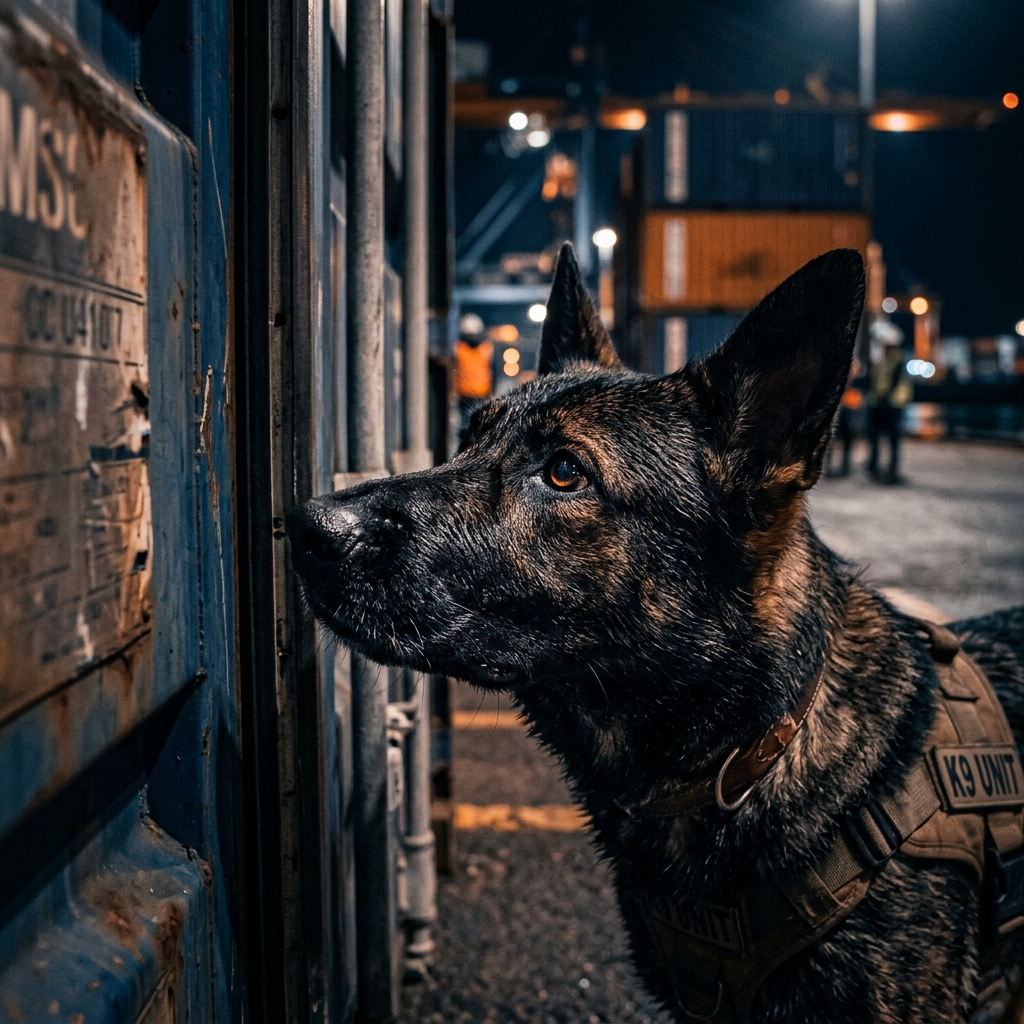
K-9 Canine Inspection: The Frontline of Port Security
The role of detection dogs in maritime security
K-9 canine inspection is one of the most efficient and reliable tools for detecting illicit substances in the port environment. Dogs trained to sniff out drugs, explosives, weapons, and other contraband materials have an olfactory capacity up to 300 times superior to humans, able to detect hidden substances in places where scanners and electronic equipment cannot reach.
In the maritime context, K-9 inspection is especially valuable because ships are complex structures with thousands of compartments, confined spaces, ballast tanks, and hard-to-reach areas. A trained dog can sweep a large vessel in a fraction of the time required for a manual search.
Why K-9 inspection is critical
1. ISPS Code compliance
The International Ship and Port Facility Security Code (ISPS Code) requires ports and vessels to maintain rigorous security protocols. Canine inspection is one of the most effective measures to meet security level 2 and 3 requirements, demonstrating proactiveness in threat prevention.
2. Detection in inaccessible areas
X-ray scanners and metal detectors are effective for palletized cargo and containers but have limitations on ships. Detection dogs access holds, cofferdams, spaces between bulkheads, ventilation systems, and storage areas that no electronic equipment can cover with the same efficiency.
3. Speed of operation
An experienced K-9 team can inspect an entire ship — including decks, crew accommodations, engine room, and cargo holds — in 4 to 8 hours, depending on size. An equivalent manual search would take days and require dozens of professionals.
4. Deterrence
The mere presence of K-9 teams at the port is a powerful deterrent factor. Criminal organizations avoid routes and ports where they know there is regular canine inspection, contributing to the security of the entire logistics chain.
5. Acceptance by authorities and insurers
K-9 inspection reports are accepted by Federal Revenue, Federal Police, and port authorities as evidence of security due diligence. Maritime insurers also view regular canine inspections positively when assessing risks and premiums.
How Arenna's K-9 operation works
1. Planning: our team assesses the type of vessel, areas to be inspected, and risk level
2. Mobilization: certified and trained K-9 team arrives at the vessel with full ISPS security protocol
3. Systematic sweep: the dog works all areas of the vessel methodically, with the handler recording each inspected sector
4. Report: at the end, we issue a detailed report with areas covered, results, and recommendations
Types of detection
- Narcotics: cocaine, marijuana, heroin, amphetamines, and derivatives
- Explosives: detonating materials, gunpowder, precursor chemicals
- Weapons and ammunition: firearms, ammunition, and concealed metal artifacts
- Contraband materials: undeclared products and illicit cargo
Conclusion
K-9 canine inspection is not a cost — it's an investment in security, compliance, and reputation. In an industry where a single smuggling incident can result in millions in fines, vessel seizure, and irreparable damage to the shipowner's image, prevention with detection dogs is the smartest strategy.
Arenna Logistics operates with certified K-9 teams in all ports across Brazil, with protocols aligned to the ISPS Code and 24/7 service.
Request a K-9 inspection for your vessel or terminal.
Other Articles
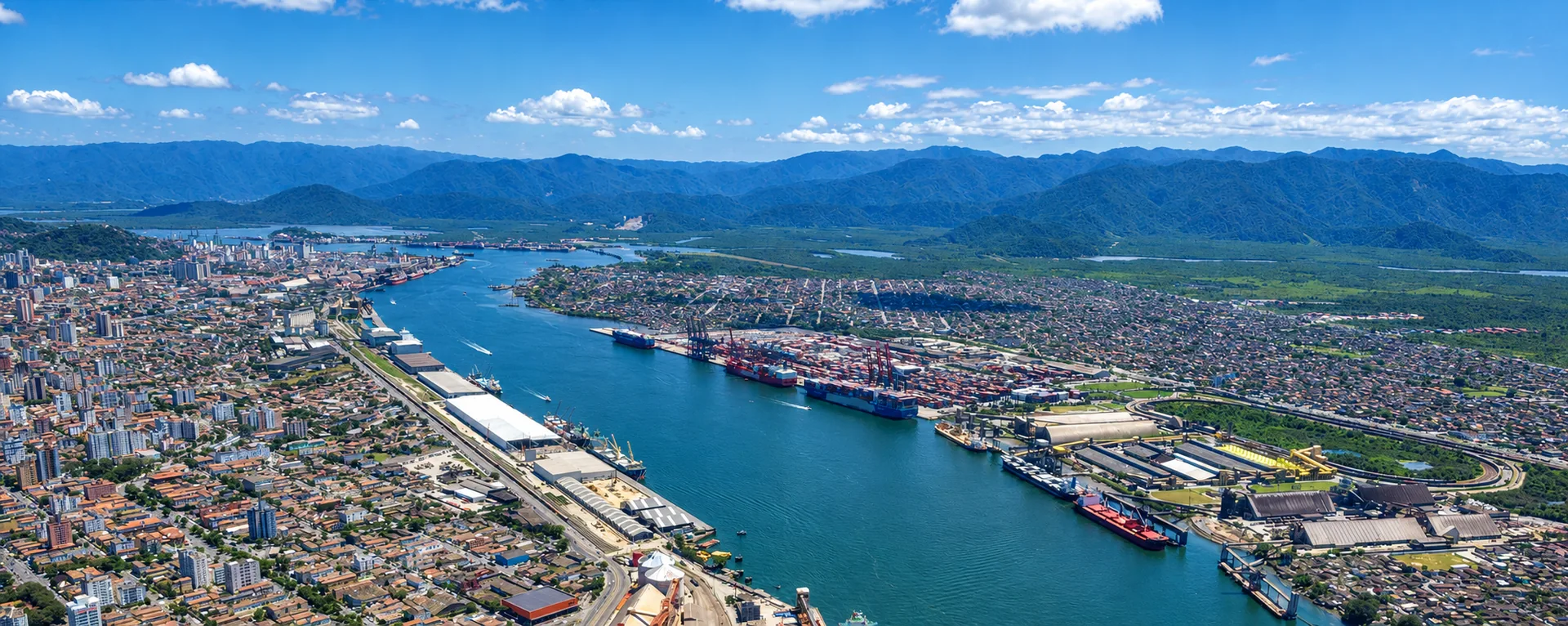
Brazilian Customs Finds 43 kg of Cocaine Hidden in Container Structure at the Port of Santos
Brazil's Federal Revenue Service (Receita Federal) seized approximately 43 kilograms of cocaine concealed within the structure of a container at the Port of Santos, on the coast of São Paulo. The case...
Brazilian Customs Seizes 448 kg of Cocaine in Two Operations at the Port of Santos
Brazilian Customs Seizes 448 kg of Cocaine in Two Operations at the Port of SantosBrazil's Federal Revenue Service (Receita Federal) seized 448 kilograms of cocaine during two separate enforcement ope...